best-of
Best Habit Tracker + To-Do List Apps in One (2026)
Why combine habits and tasks, and which apps do both well: TickTick, DonDon, Habitica, Notion, Structured and Todoist compared.
Why one app is better than two
A separate habit tracker and task manager means two places to check. Habits then lose, because they are quiet and tasks are loud. A combined view fixes that: the morning screen shows today's tasks and today's habits together.
What to look for:
- Habits on the Today screen, not hidden in another tab.
- Streaks and a history view so you can see consistency, not just a checkbox.
- Flexible schedules (daily, weekdays, X times a week).
- Reminders that do not nag.
- Sync across the devices you use.
Comparison
| App | Tasks | Habits | Streak history | Free habits | Reported price |
|---|---|---|---|---|---|
| DonDon | Yes | Yes | Calendar heatmap | 1 | Free; $1.99/mo or $11.99/yr |
| TickTick | Yes | Yes | Yes | Limited | About $36–50/yr |
| Habitica | Basic to-dos | Yes (RPG) | Yes | Yes | Free; sub about $4.99/mo |
| Notion | DIY | DIY | DIY | Yes | Free; paid from about $10/member/mo |
| Structured | Timeline tasks | Limited | – | – | Free; Pro roughly $10–20/yr |
| Todoist | Yes | Recurring tasks only | – | – | Free; Pro about $60/yr |
Reported prices checked 2 November 2026 and vary by source and region.
How DonDon handles it
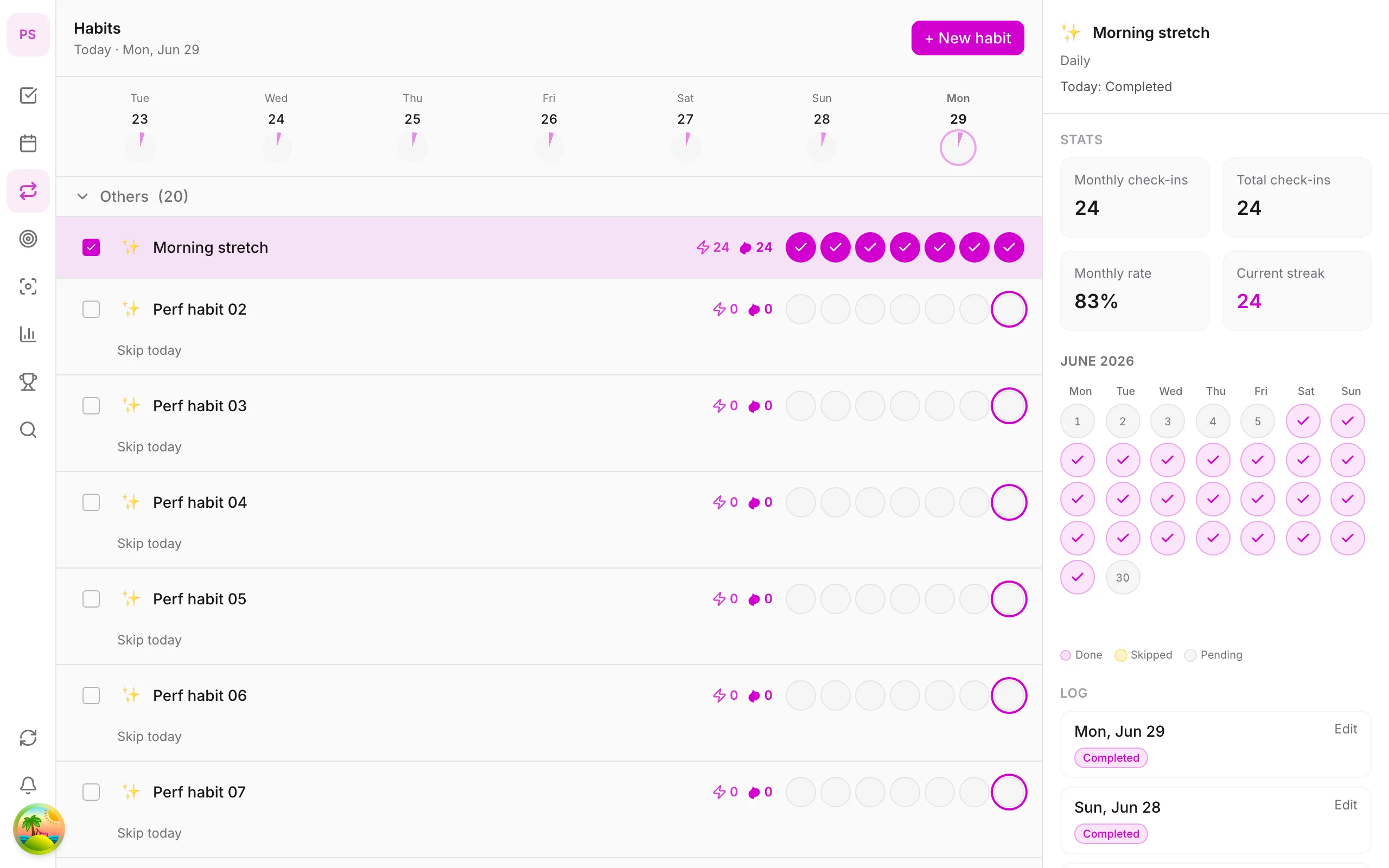
- Today view shows habits in a dedicated section above or beside your tasks.
- Each habit has a calendar heatmap so you can see streaks and gaps at a glance.
- Habits connect to achievements for a little motivation.
- On desktop, an optional companion pet can remind you of pending habits (Premium). See desktop pet productivity apps.
Plans: Free includes 1 habit and week goals. Premium ($1.99/month or $11.99/year) allows up to 50 habits and adds month and year goals, so you can tie habits to bigger targets. See the habit tracker guide and goals guide.
Honest note: one free habit is a real limit. It is enough to test the method, not to run a full routine.
A simple starter setup
- Pick one habit that takes under two minutes (for example, "walk 10 minutes").
- Attach it to an existing routine; see habit stacking examples.
- Check it off from the Today view for 21 days.
- Add a second habit only after the first feels automatic.
How habit tracking actually works
Understanding the loop helps you judge an app. Every habit follows four stages: a cue (the trigger), a craving (why you want it), a response (the action) and a reward (what you get). A tracker supports the cue and the reward. It reminds you at the right moment and gives a small payoff when you check it off.
That is why the place the tracker lives matters more than its features. A habit app you open once a week is a diary. A habit that sits on the screen you already check every morning is a cue.
What to look for in the details
Scheduling flexibility. Real life is not "every day". Look for weekdays only, X times per week, and the ability to skip a day without breaking the streak when you are ill or travelling.
Streak handling. Strict streaks can motivate and can also punish. Prefer apps that show history and consistency, not only a number that resets to zero.
Reminders. One reminder at a useful time beats a stream of nagging. Check that reminders can be tied to a time and not just "morning".
Notes and context. Being able to jot a quick note ("skipped, had a cold") helps you learn from misses.
Statistics. A calendar heatmap or weekly view lets you spot patterns, such as habits you reliably skip on Fridays.
Quotas on free plans. Many apps limit habits on free tiers. DonDon's Free plan includes one habit, which is enough to try the method and not enough to run a whole routine.
Combining habits with tasks: practical patterns
Habit as a recurring task. Simple, but you lose streaks and history.
Habit plus a linked goal. "Run 3 times a week" supports "half marathon in October". Keeping both in one app makes the link visible.
Habit on the Today screen. Seeing today's habits beside today's tasks keeps them from becoming background noise.
Habits that open a task. A habit like "weekly review" can trigger a task list ("clear inbox, check calendar, pick top three"). See the weekly review template.
Starting a habit that sticks
- Choose one habit. Pick the one that makes other things easier, such as sleep or a morning walk.
- Make it tiny. Two minutes. "Put on running shoes" counts.
- Anchor it. Attach it to something you already do; see habit stacking examples.
- Track immediately. Check it off when you finish, not at the end of the day.
- Expect misses. Plan the recovery ("if I miss, I do the tiny version tomorrow") and never miss twice.
- Review weekly. Look at the heatmap and adjust.
When to upgrade from free
Upgrade only when you have a real reason:
- You have a habit that works and want to add more.
- You want month and year goals connected to your habits.
- You want a calendar view of your week.
In DonDon, Premium ($1.99/month or $11.99/year) raises habits from one to up to 50 and adds month/year goals, the calendar and more. Until you need them, the free plan is a fine place to learn what works for you.
Common mistakes
- Tracking too many habits at once. Start with one to three.
- Making the habit too ambitious. "Run 5 km daily" fails; "put on shoes and walk 5 minutes" holds.
- Relying on motivation. Use cues, not willpower.
- Treating a broken streak as failure. Resume the next day.
Which one to choose
- Tasks + habits + goals + focus timer, quiet design: DonDon.
- Large feature set with a long track record: TickTick.
- You want game mechanics: Habitica (alternatives).
- You like building systems: Notion (Notion vs a dedicated app).
Start with the Free plan.
Frequently asked questions
- Why combine a habit tracker and a to-do list?
- Because both answer the same question: what should I do today? Seeing recurring habits next to one-off tasks stops habits living in an app you forget to open.
- Which free app has both habits and tasks?
- TickTick and DonDon both include habits on a free plan with limits. DonDon's Free plan has one habit; Premium raises it to 50.
- How many habits should I track?
- Start with one to three. Tracking ten habits at once is the fastest way to abandon all of them.
Create a free account and start managing tasks today.
Smart task management — focus on what matters.
Create free account